

Dear wonderful readers,
It’s been a quieter couple of weeks on the filming front due to the holidays and end-of-year wrap-ups. Christmas itself was a gentle one, spent mostly in London, which is a change for us… and a rather welcome pause.
As we turn toward a new year, I’ve been thinking about what feels most meaningful to share right now. I don’t have a grand announcement, but I’m thinking about something practical, lasting, and quietly powerful.
And it’s something many of you have asked me about over the years.
So for this newsletter, I want to focus on one idea:
Making 2026 the year you begin preserving and transcribing the letters and papers in your care.
Here’s what I’ll be sharing:
• Why personal letters matter more than we realise
• A simple starter kit for preserving family papers
• How to scan and transcribe letters at home
• How we work with Alberta’s letters as an example
• A nudge to begin!
Let’s dive in.

A Quiet Inheritance: The Letters We Keep
So many of you have written to tell me about letters tucked away in drawers, trunks, and boxes. There is a lot of correspondence between grandparents, diaries kept during wartime, notes written in careful handwriting that no one has read in decades.
As a historian (I can officially say that now!) I get so excited about this. These are first-hand historical records. They carry voice, rhythm, opinion, emotion. This is the texture of a life as it was lived!
But they are also fragile. Ink fades. Paper yellows. Context is forgotten. And once that happens, so much meaning is lost.
And let me tell you: you don’t need to be an archivist to begin caring for them!
(A quick note here about archival work, since many people comment on this! The new, science-backed practice for handling historical documents is NOT to wear gloves! The gloves can actually damage documents, especially parchment. It turns out that the natural oils on our hands help to preserve documents!)
Preserving Papers 101: A Starter Kit
This isn’t info for professional archives, so it won’t be too hard to do this or get hold of these tools. I’ve designed this starter kit for families, not institutions.
What to gather first
You don’t need everything at once. Start with (I have links here as well!):
Acid-free archival boxes or folders (labelled clearly)
Archival sleeves or envelopes for particularly fragile letters
Pencils only or archive pens for labelling
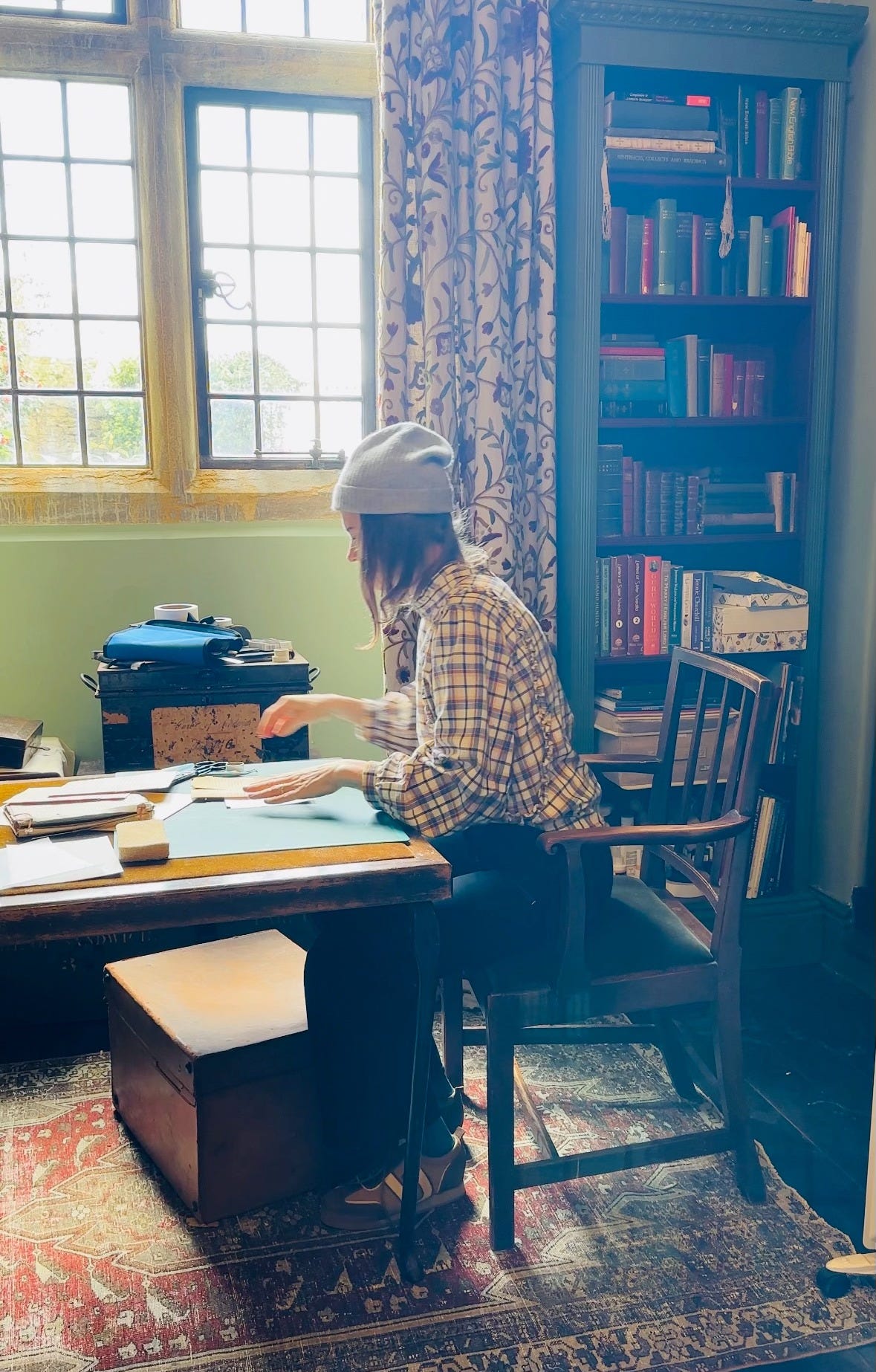
A clean, dry workspace with good light
If you can’t find archival supplies immediately, don’t let that stop you. The most important thing is handling letters gently and keeping them dry, flat, and away from light.
Scanning your Letters (without expensive equipment)
We scan all of Alberta’s letters, but that doesn’t mean you need a professional scanner.
You can use:
A flatbed scanner
Or a high-quality phone scanning app (such as CamScanner, which I love)
The key things to remember:
Photograph or scan letters flat, without bending
Capture every page, including envelopes
Save boxfiles with clear names (e.g. “AS/PERS/1”) (translation: Alberta Sturges, Personal, Boxfile 1)
Save folders under the boxfile (example above) with clear names (e.g. “UK_to_USA_1”)
Save letters under the corresponding folders with clear names (e.g. 1926Letter08)
Back them up! Keep your files in different places… trust me
Digital copies protect the originals and make transcription far easier.
Transcribing: Slow, Careful, and Surprisingly Intimate
Transcription is where letters truly come alive.
When we transcribe Alberta’s letters, we do so line by line, preserving:
Original spelling
Punctuation (or lack of it)
Crossed-out words
Insertions and margins
This isn’t about polishing or changing the text; you can do that later in a different document if you’d like to. What’s important is to faithfully recording what is there.
A basic transcription format includes:
The writer
The recipient
The date (or estimated date)
The location
The full text of the letter
Even transcribing one letter can transform how you understand a person.
Here’s an example of how we format that on the page:
Letter from Alberta Sturges Montagu to Jojo [Josephine MacLeod] 21 April 1926, 1/14 pages, transcribed from digital image of handwritten letter, original held in the 2023 Alberta Sturges Research Project, 1926Letter08.docx, Mapperton House, Beaminster, West Dorset, England DT8 3NR: transcribed LM, April 2025.
HINCHINGBROOKE
HUNTINGDON
April 21.1926
Darling Jojo:
Your last letter before the arrival
of the Brewsters came yesterday.
I can imagine your large party
nine days on the Ganges bank.
Here the spring persists in
spite of east winds and gloom,
such a sharing. The daffodils &
primroses have gone and we
are now having tulips forget me
[Page 1 of 14]
Can AI help? Yes… but Thoughtfully
Used carefully, AI can be a helpful tool for first-pass transcription, especially if handwriting is clear. It can save time and reduce the intimidation of a blank page.
But—and this is important—AI should assist, not replace, human judgement. Always:
Check every word
Compare against the original image
Correct errors and note uncertainties
Think of it as a draft assistant, not an authority. And you should always have the final say as to what is accurate. Remember that AI can make things up!
How We Do This with Alberta’s Letters
This is exactly how the Alberta letters are handled:
Scanned carefully
Transcribed in full by the team of amazing volunteers
Annotated with names, places, and context
Stored physically and digitally
What began as a family archive has become a research collection simply because someone took the time to begin.
And I want this for you, too!
My Nudge To You for 2026
If you’re looking for a meaningful intention for the year ahead, let this be permission to start small with creating a family archive.
Family history and legacy isn’t just for aristocrats! Imagine the work you do now meaning so much to future generations… and perhaps even research for a dissertation!
You don’t need to finish… it might never be finished. You just need to begin.
What you preserve now may one day help someone understand their history—or themselves—a little more clearly.
With love and gratitude,
Xx Julie
I wish I had some family historical documents to preserve it be wonderful I do have a mystery in my family my father's mother supposedly died in a fire when he was seven I can find a birth certificate but there is no death certificate and she died over 70 years ago
Thanks so much for the nudge to preserve our histories. I used the boxes and tissue paper when preserving the writing, and all related instruments of my luthier after he passed away. And same with all the paperwork I collected from my family. There isn’t a lot due to a fire, but it was fun to see what I had gathered/collected. Storing it all in preservation boxes let me treasure each letter, document and photo. Anyway, this is one of the reasons I’m so excited for all your work at Mapperton. Someday I will visit.